Why studios and one-bedrooms are sitting longer in 2026
A four-hundred-square-foot condo in downtown Toronto listed for $489,000 in June sat for 87 days before the seller dropped the price by $50,000. It still hasn't sold. Three blocks over, a two-bedroom unit in the same building that came to market two weeks later went firm in eleven days at asking.
Active listings for studios and one-bedrooms in the Greater Toronto Area have increased materially year-over-year as of September 2026, while inventory for two- and three-bedroom layouts has remained comparatively tight. The divergence traces to a collision between who these units were built for and who is actually buying in today's mortgage environment.
The investor model has collapsed
Most studio and one-bedroom condos built in the last decade were designed as rental income streams. Developers priced them per square foot at a premium, knowing the buyer would be a landlord, not an occupant. The math worked at 1.79% five-year fixed. At current rates averaging 3.94% to 4.94%, the same unit now cash-flows negative. Monthly carrying costs, mortgage, property tax, maintenance fees, routinely exceed market rent by substantially wider margins than in the prior rate environment.
Mom-and-pop investors who bought pre-construction assignments in 2021 are listing the moment they close. Some never move in. A significant share of studio listings in the downtown core are from owners who held the property for fewer than six months, a pattern that screams distress rather than market timing.
End-users want space
The buyers still active in 2026 are end-users: people buying to live in the unit. That cohort has different needs. A couple with one child cannot make a 420-square-foot layout work, regardless of price. A single professional working from home three days a week needs a second room. The "investment-grade" shoebox that commanded bidding wars in 2019 is now unsellable to the only demographic with approved financing.
Even first-time buyers stretching to enter the market are skipping studios. Lenders are appraising micro-condos below purchase price in some neighbourhoods, forcing buyers to cover valuation gaps out of pocket. A $30,000 appraisal shortfall erases most of the affordability advantage a smaller unit was supposed to provide.
Developers built to the wrong spec
The glut isn't evenly distributed. Purpose-built rental towers with larger, family-friendly layouts are maintaining strong occupancy rates. Luxury two-bedroom condos priced over $1.2 million continue to clear. The stalled inventory sits in a narrow band: investor-grade units under 550 square feet, built during the era when "condo" meant "income property" by default.
That era ended when the Bank of Canada's rate hikes from 2022 through early 2024 hit renewals. The lag effect is now fully realized. The condo sector is showing the highest inventory-to-sales ratio since the 2008 financial crisis, and almost all of it is concentrated in the small-format segment.
Rental yields have plateaued or declined 1% to 3% in the studio market as failed sales convert to reluctant rentals, flooding the supply side. A landlord who cannot sell is still a landlord, which means the rental inventory overhang will persist even if prices soften further.
The market is learning what a condo is actually for when speculative flipping stops working. Units people can live in are moving. Units designed as line items on a spreadsheet are sitting, and will keep sitting until either rates drop by 200 basis points or sellers capitulate by $100,000. Neither is happening this fall.


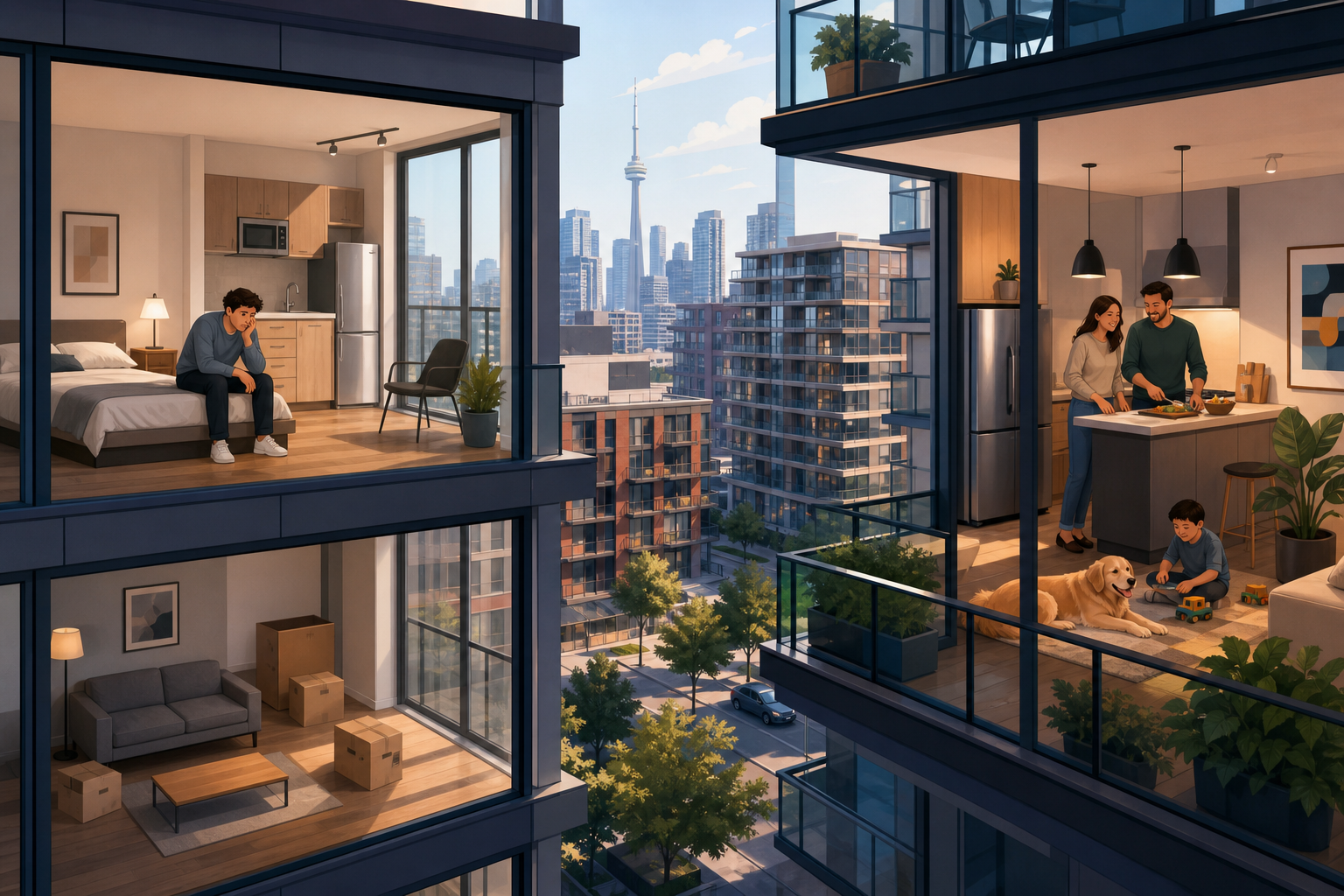

A four-hundred-square-foot condo in downtown Toronto listed for $489,000 in June sat for 87 days before the seller dropped the price by $50,000. It still hasn't sold. Three blocks over, a two-bedroom unit in the same building that came to market two weeks later went firm in eleven days at asking.
Active listings for studios and one-bedrooms in the Greater Toronto Area have increased materially year-over-year as of September 2026, while inventory for two- and three-bedroom layouts has remained comparatively tight. The divergence traces to a collision between who these units were built for and who is actually buying in today's mortgage environment.
The investor model has collapsed
Most studio and one-bedroom condos built in the last decade were designed as rental income streams. Developers priced them per square foot at a premium, knowing the buyer would be a landlord, not an occupant. The math worked at 1.79% five-year fixed. At current rates averaging 3.94% to 4.94%, the same unit now cash-flows negative. Monthly carrying costs, mortgage, property tax, maintenance fees, routinely exceed market rent by substantially wider margins than in the prior rate environment.
Mom-and-pop investors who bought pre-construction assignments in 2021 are listing the moment they close. Some never move in. A significant share of studio listings in the downtown core are from owners who held the property for fewer than six months, a pattern that screams distress rather than market timing.
End-users want space
The buyers still active in 2026 are end-users: people buying to live in the unit. That cohort has different needs. A couple with one child cannot make a 420-square-foot layout work, regardless of price. A single professional working from home three days a week needs a second room. The "investment-grade" shoebox that commanded bidding wars in 2019 is now unsellable to the only demographic with approved financing.
Even first-time buyers stretching to enter the market are skipping studios. Lenders are appraising micro-condos below purchase price in some neighbourhoods, forcing buyers to cover valuation gaps out of pocket. A $30,000 appraisal shortfall erases most of the affordability advantage a smaller unit was supposed to provide.
Developers built to the wrong spec
The glut isn't evenly distributed. Purpose-built rental towers with larger, family-friendly layouts are maintaining strong occupancy rates. Luxury two-bedroom condos priced over $1.2 million continue to clear. The stalled inventory sits in a narrow band: investor-grade units under 550 square feet, built during the era when "condo" meant "income property" by default.
That era ended when the Bank of Canada's rate hikes from 2022 through early 2024 hit renewals. The lag effect is now fully realized. The condo sector is showing the highest inventory-to-sales ratio since the 2008 financial crisis, and almost all of it is concentrated in the small-format segment.
Rental yields have plateaued or declined 1% to 3% in the studio market as failed sales convert to reluctant rentals, flooding the supply side. A landlord who cannot sell is still a landlord, which means the rental inventory overhang will persist even if prices soften further.
The market is learning what a condo is actually for when speculative flipping stops working. Units people can live in are moving. Units designed as line items on a spreadsheet are sitting, and will keep sitting until either rates drop by 200 basis points or sellers capitulate by $100,000. Neither is happening this fall.
Sources
Read Next
The OAS Clawback Is 15 Cents Per Dollar, Not 30 or 50
7 streaming services worth paying for in Canada, plus the credit cards that cut your bill
Ontario and B.C. First-Time Buyers Are Borrowing in Pairs, and the Cracks Are Starting to Show
Why Paying Off Your Mortgage First Can Cost You More Than the Interest Rate