Why a West Coast Pipeline May Not Prevent the Next Oilsands Bust
When Alberta's oil sells for less, Kelowna feels it within a few months. Some of the buyers for Okanagan lake homes, rental condos and move-up properties earn their income in the oilsands. So when Premier Danielle Smith and Prime Minister Mark Carney say Canada will be ready for the next boom, and point to a new West Coast corridor as the reason, investors and homeowners in the BC Interior have a stake in whether that is true.
The common view is reasonable. More pipeline capacity to tidewater means Canadian crude can reach Asian refiners instead of selling at a discount to a single U.S. buyer. That matters more now that the U.S. has imposed a 50% tariff on certain Canadian imports in 2026. A second coast is real leverage.
The evidence supports this view in one important way. Back in late 2018, Alberta's pipelines were so full that the discount on Western Canadian Select blew out, and the province ordered production curtailments. That bust came from geography. The oil was fine and the world price was fine, but there was no way to move the barrels out. The Trans Mountain Expansion, which added 590,000 barrels per day of capacity when it opened in 2024, has already narrowed that discount. Another corridor would protect against the same problem coming back as production grows. Anyone who says pipelines don't matter is wrong.
Where the argument stops working
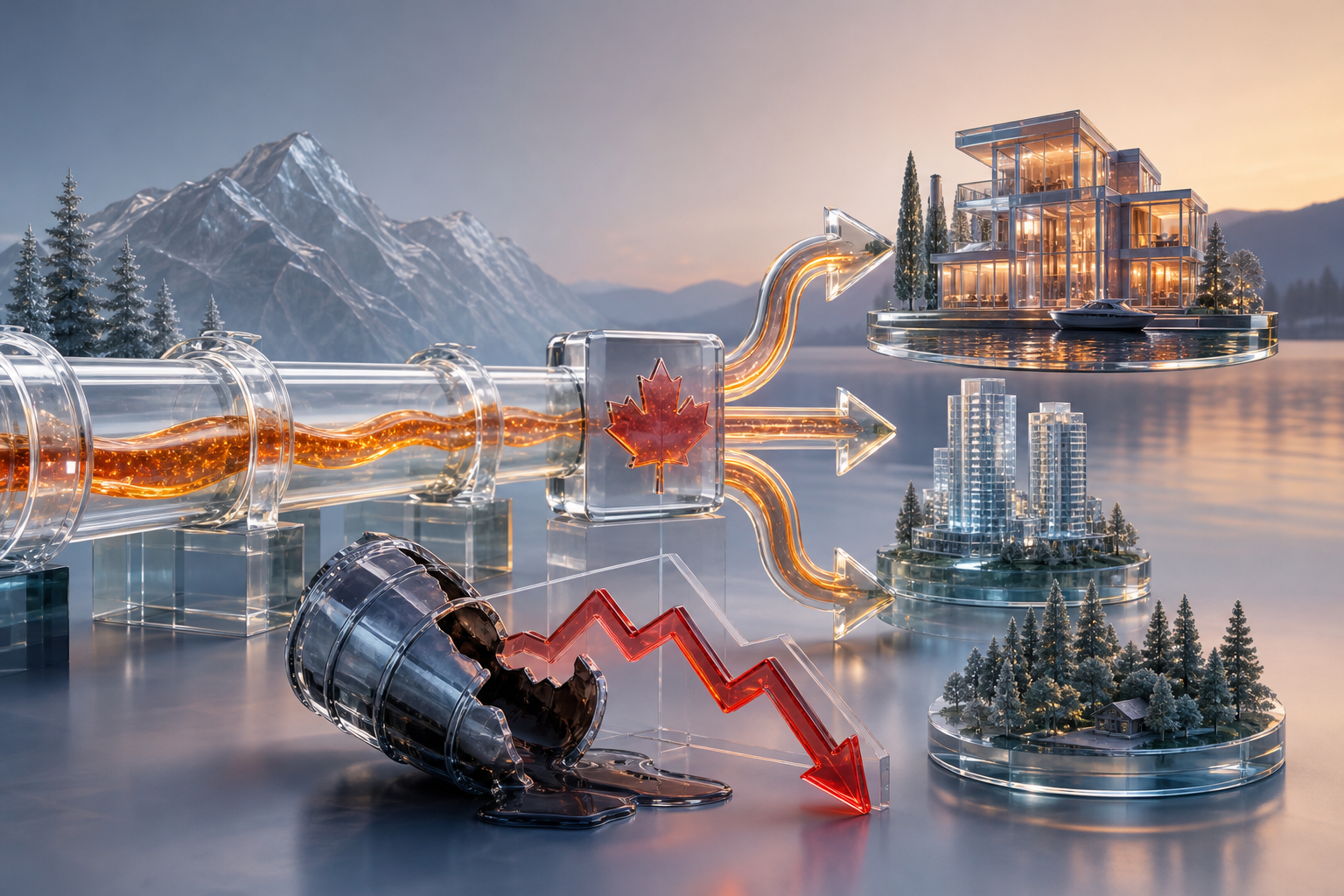
A pipeline fixes the price gap. It does not fix the price.
The deepest oilsands downturns of the last decade were not caused by a shortage of pipelines. From 2014 to early 2016, world oil prices fell from above US$100 to below US$30. In 2020, the pandemic crushed demand everywhere. Producers with tidewater access were hit too. The oil had an exit, but the buyers on the other end were paying far less.
More export capacity can make that exposure larger. A corridor built to carry more barrels supports more production and more jobs, and a regional economy more tied to a world price that Canada does not set. The new pipeline removes one way to go bust and increases the stakes of the other.
Timing matters as well. Any new line into BC has to get through the provincial Environmental Assessment Office, federal review, Indigenous partnership agreements and almost certain court challenges. Projects like this have historically taken the better part of a decade. Federal emissions policy is also still in play. A corridor being discussed in 2026 will do nothing for a price shock in 2027.
A better question for BC and Ontario property owners
Asking "will the pipeline get built?" is less useful than asking "which kind of downturn am I exposed to?"
If your risk is an Alberta-specific discount, pipeline progress is a fair signal. It lowers the chance of a 2018-style squeeze on energy incomes and on the buyers who carry that money into Okanagan real estate.
If your risk is a global price collapse, pipeline news tells you very little. Plan around oil prices, not approval headlines.
In practice, here is what that means:
For investors counting on Alberta-sourced demand to support resale values or rents in Kelowna, test the plan against a year when that demand thins out. Ask whether you could hold the property without it.
For self-employed borrowers and business owners whose income is tied to energy work, lenders generally look at income over more than one year. A single boom year often won't carry the application you expected. Build your plan on your weaker years.
For pre-retirees taking on new debt near the top of a cycle, keep the payment comfortable on a lower income, not your best year's income.
A West Coast corridor would make Canada better at selling oil. It would not make Canada any better at controlling what the world pays for it. Plan for the second risk as seriously as the first.



When Alberta's oil sells for less, Kelowna feels it within a few months. Some of the buyers for Okanagan lake homes, rental condos and move-up properties earn their income in the oilsands. So when Premier Danielle Smith and Prime Minister Mark Carney say Canada will be ready for the next boom, and point to a new West Coast corridor as the reason, investors and homeowners in the BC Interior have a stake in whether that is true.
The common view is reasonable. More pipeline capacity to tidewater means Canadian crude can reach Asian refiners instead of selling at a discount to a single U.S. buyer. That matters more now that the U.S. has imposed a 50% tariff on certain Canadian imports in 2026. A second coast is real leverage.
The evidence supports this view in one important way. Back in late 2018, Alberta's pipelines were so full that the discount on Western Canadian Select blew out, and the province ordered production curtailments. That bust came from geography. The oil was fine and the world price was fine, but there was no way to move the barrels out. The Trans Mountain Expansion, which added 590,000 barrels per day of capacity when it opened in 2024, has already narrowed that discount. Another corridor would protect against the same problem coming back as production grows. Anyone who says pipelines don't matter is wrong.
Where the argument stops working
A pipeline fixes the price gap. It does not fix the price.
The deepest oilsands downturns of the last decade were not caused by a shortage of pipelines. From 2014 to early 2016, world oil prices fell from above US$100 to below US$30. In 2020, the pandemic crushed demand everywhere. Producers with tidewater access were hit too. The oil had an exit, but the buyers on the other end were paying far less.
More export capacity can make that exposure larger. A corridor built to carry more barrels supports more production and more jobs, and a regional economy more tied to a world price that Canada does not set. The new pipeline removes one way to go bust and increases the stakes of the other.
Timing matters as well. Any new line into BC has to get through the provincial Environmental Assessment Office, federal review, Indigenous partnership agreements and almost certain court challenges. Projects like this have historically taken the better part of a decade. Federal emissions policy is also still in play. A corridor being discussed in 2026 will do nothing for a price shock in 2027.
A better question for BC and Ontario property owners
Asking "will the pipeline get built?" is less useful than asking "which kind of downturn am I exposed to?"
In practice, here is what that means:
A West Coast corridor would make Canada better at selling oil. It would not make Canada any better at controlling what the world pays for it. Plan for the second risk as seriously as the first.
Read Next
Restructuring Your Mortgage Is Not a Rescue Mission
What a Mortgage Rate Discount Is Designed to Keep You From Noticing
Bank of Canada Cuts Won't Save Your Fixed Rate From U.S. Inflation
7 Debt Ratio Checks That Set Your Mortgage Ceiling Before Your Credit Score Matters