Today's Affordability Gains Are Being Paid For With Tomorrow's Housing Shortage
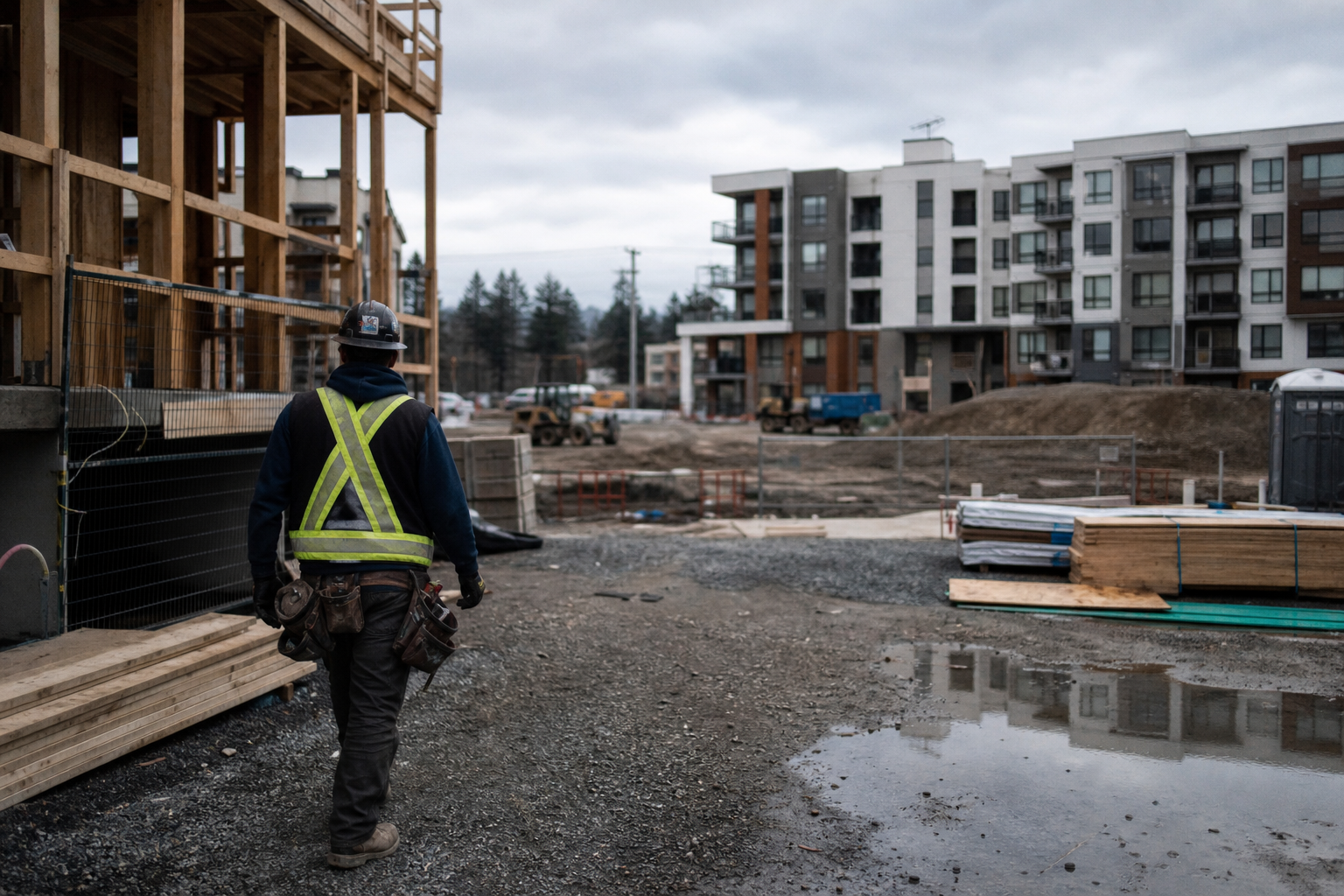
The buyers finding some breathing room in 2026 are living off decisions builders made around 2022 and 2023. The condos and townhomes finishing now, the extra resale listings, the landlords offering a free month: most of that was financed and started when money was cheap and the outlook was hot. CMHC's chief economist, Mathieu Laberge, has warned that slowing construction could reverse those recent affordability gains.
The common read is that softer prices and slower building mean the pressure is easing and patience pays. For the next year or so, that read holds up. Where it fails is the timeline. Housing supply works on a delay, and the slowdown under way now shows up as a shortage only after today's extra inventory is absorbed. If you hold property, plan to build, or are weighing when to buy, the number that matters is what's breaking ground this year.
Starts predict the market better than listings do
Waiting does work in some places. In pockets like high-end condos in Toronto and Vancouver, projects launched a few years ago are landing in a slow market, and buyers there have real negotiating room.
That room is borrowed from the future. Canada started 259,028 homes in 2025, according to CMHC, and the agency says starts across 2024 and 2025 fell short of the pace needed for 3.5 million additional units by 2030. Its newer projection puts the need as high as 4.69 million homes by 2036. A drop in starts usually takes a year or two to reach resale and rental markets, which makes this the quiet stretch before it does.
When you size up a market, check permits and starts in that city alongside the listing count. Listings tell you about the last cycle. Starts tell you about the next one.
Cheaper money won't restart the cranes on its own
The Bank of Canada began cutting rates in June 2024, and plenty of people assume construction will bounce back as borrowing gets cheaper. Laberge has pointed out that even if rates stabilize, the structural costs of building, including development charges and regulatory timelines, remain the main barriers. Add skilled-trade shortages, material costs and BC code updates that raise the cost per square foot, and a quarter point off a construction loan rarely rescues a project whose numbers don't work. Lenders have also tightened debt-coverage requirements for developers, which hits mid-sized builders in the Okanagan hard.
Policy is pushing the right way. BC's small-scale, multi-unit housing rules now require municipalities to allow three to six units on many single-family lots, depending on lot size and transit proximity, and Ontario's Cutting Red Tape to Build More Homes Act aims to speed approvals. A zoning change grants permission, though, and someone still has to finance the project and connect it to sewer, water and power. In Kelowna, that servicing can lag the rezoning. Meanwhile permanent resident targets and migration into BC and Ontario keep adding demand faster than completions.
So when you judge future supply, ask whether projects can actually be financed and serviced, and give less weight to whether they're allowed.
Plan for both stretches
A delayed shortage gives you two markets to plan around. The first is the soft period now, where carrying costs and vacancy in oversupplied segments can squeeze anyone stretched too thin. The second is the tighter market later this decade, where property coming to market may face far less competition from new inventory.
Surviving the first is what lets you benefit from the second. That means mortgage terms and cash flow that hold up if rents flatten for a while, not a plan that only works if the shortage arrives on schedule. For homeowners in BC with a lot that now permits more units, adding density is one of the few ways to build while large developers pause. For investors looking at multi-unit projects, CMHC is pushing for financing beyond traditional bank lending, and insured programs like MLI Select already exist for that kind of build.
Before your next move, look up what broke ground in your area this year and last. That figure describes the market you'll be renting, selling or refinancing into far better than anything on the listing sites today.



The buyers finding some breathing room in 2026 are living off decisions builders made around 2022 and 2023. The condos and townhomes finishing now, the extra resale listings, the landlords offering a free month: most of that was financed and started when money was cheap and the outlook was hot. CMHC's chief economist, Mathieu Laberge, has warned that slowing construction could reverse those recent affordability gains.
The common read is that softer prices and slower building mean the pressure is easing and patience pays. For the next year or so, that read holds up. Where it fails is the timeline. Housing supply works on a delay, and the slowdown under way now shows up as a shortage only after today's extra inventory is absorbed. If you hold property, plan to build, or are weighing when to buy, the number that matters is what's breaking ground this year.
Starts predict the market better than listings do
Waiting does work in some places. In pockets like high-end condos in Toronto and Vancouver, projects launched a few years ago are landing in a slow market, and buyers there have real negotiating room.
That room is borrowed from the future. Canada started 259,028 homes in 2025, according to CMHC, and the agency says starts across 2024 and 2025 fell short of the pace needed for 3.5 million additional units by 2030. Its newer projection puts the need as high as 4.69 million homes by 2036. A drop in starts usually takes a year or two to reach resale and rental markets, which makes this the quiet stretch before it does.
When you size up a market, check permits and starts in that city alongside the listing count. Listings tell you about the last cycle. Starts tell you about the next one.
Cheaper money won't restart the cranes on its own
The Bank of Canada began cutting rates in June 2024, and plenty of people assume construction will bounce back as borrowing gets cheaper. Laberge has pointed out that even if rates stabilize, the structural costs of building, including development charges and regulatory timelines, remain the main barriers. Add skilled-trade shortages, material costs and BC code updates that raise the cost per square foot, and a quarter point off a construction loan rarely rescues a project whose numbers don't work. Lenders have also tightened debt-coverage requirements for developers, which hits mid-sized builders in the Okanagan hard.
Policy is pushing the right way. BC's small-scale, multi-unit housing rules now require municipalities to allow three to six units on many single-family lots, depending on lot size and transit proximity, and Ontario's Cutting Red Tape to Build More Homes Act aims to speed approvals. A zoning change grants permission, though, and someone still has to finance the project and connect it to sewer, water and power. In Kelowna, that servicing can lag the rezoning. Meanwhile permanent resident targets and migration into BC and Ontario keep adding demand faster than completions.
So when you judge future supply, ask whether projects can actually be financed and serviced, and give less weight to whether they're allowed.
Plan for both stretches
A delayed shortage gives you two markets to plan around. The first is the soft period now, where carrying costs and vacancy in oversupplied segments can squeeze anyone stretched too thin. The second is the tighter market later this decade, where property coming to market may face far less competition from new inventory.
Surviving the first is what lets you benefit from the second. That means mortgage terms and cash flow that hold up if rents flatten for a while, not a plan that only works if the shortage arrives on schedule. For homeowners in BC with a lot that now permits more units, adding density is one of the few ways to build while large developers pause. For investors looking at multi-unit projects, CMHC is pushing for financing beyond traditional bank lending, and insured programs like MLI Select already exist for that kind of build.
Before your next move, look up what broke ground in your area this year and last. That figure describes the market you'll be renting, selling or refinancing into far better than anything on the listing sites today.
Sources
Read Next
Restructuring Your Mortgage Is Not a Rescue Mission
What a Mortgage Rate Discount Is Designed to Keep You From Noticing
Bank of Canada Cuts Won't Save Your Fixed Rate From U.S. Inflation
7 Debt Ratio Checks That Set Your Mortgage Ceiling Before Your Credit Score Matters