Ontario falling further behind its 1.5 million new homes target as ministers back away from the goal
The province just moved the goalposts. Again.
Ontario's housing target for 2031 was always described as "1.5 million homes." Most people, including most real estate professionals, read that as total housing stock. It wasn't. The target has always been 1.5 million new homes by 2031, meaning net additions to the existing supply. The stock Ontario already has doesn't count toward the target. On March 27, 2026, the province's budget revealed it was falling even further behind that goal.
That distinction matters because Ontario's housing inventory in 2026 sits somewhere around 5.9 million units. The province isn't aiming for 1.5 million total. It's aiming to add 1.5 million on top of what's already here. If you're waiting for prices to soften because supply is "catching up," you're waiting on a different timeline than you thought.
Why this isn't just semantics
The language shift rewrites the math. A target of 1.5 million homes total would mean the province was roughly two-thirds of the way there before it started. A target of 1.5 million new homes means Ontario needs to build at a pace it has never sustained in modern history.
Between 2016 and 2021, Ontario added roughly 350,000 homes, according to census data. That's 70,000 per year. To hit 1.5 million new units by 2031, the province needs to average 175,000 starts annually. The best year Ontario has ever recorded was around 100,000 starts. The target requires roughly 75% more than that peak, every year, without a miss.
The gap isn't narrowing. It's widening.
What this does to price expectations
If you're a first-time buyer in the GTA and you've been holding off because "supply is coming," the clarified target should reset that assumption. Supply is not coming at the speed required to move prices materially lower in the near term. The arithmetic doesn't support it.
A detached home in Mississauga that sold for $1.4 million in February 2022, dropped to $1.19 million by mid-2023, and has since climbed back to around $1.3 million is not going back to $900,000 just because Ontario announced a higher target. The target has to turn into actual housing, and actual housing requires zoning changes, municipal approvals, financing, labour, and time. None of those move quickly.
If you're waiting for a market where bidding wars disappear because listings outnumber buyers, you're waiting on a 2029 scenario at the earliest, and that's assuming Ontario somehow triples its annual build rate starting this year. It won't.
The municipal problem nobody's fixing
Ontario can announce any target it wants. The constraint isn't political will. It's municipal capacity. Most of the GTA's housing growth happens in a handful of outer suburbs: Brampton, Vaughan, Milton, Pickering. Those municipalities are already approving developments faster than they can expand the roads, water lines, transit, and schools needed to serve them.
The province can override zoning and force density. It's done that. But it can't override the fact that a municipality with a $400 million annual capital budget and $2 billion in deferred maintenance on roads, water lines, transit, and schools can't suddenly absorb 15,000 new units a year without breaking something.
That bottleneck doesn't show up in the province's housing target. It shows up three years later when developments sit half-built because the city couldn't issue occupancy permits fast enough.
What you should do with this
If you're buying, the clarified target doesn't change the decision. It confirms what the market was already telling you: supply is not arriving fast enough to drive prices down in the near term. If you're waiting for a collapse, you're betting against the math.
If you're selling, the same logic applies. The inventory crunch isn't resolving this year or next. Pricing power hasn't disappeared.
If you're building, the target is political theater. The real constraint is still approvals, and the province hasn't fixed that.
Ontario now needs 1.5 million new homes by 2031. The question is what happens to prices when the gap becomes undeniable.


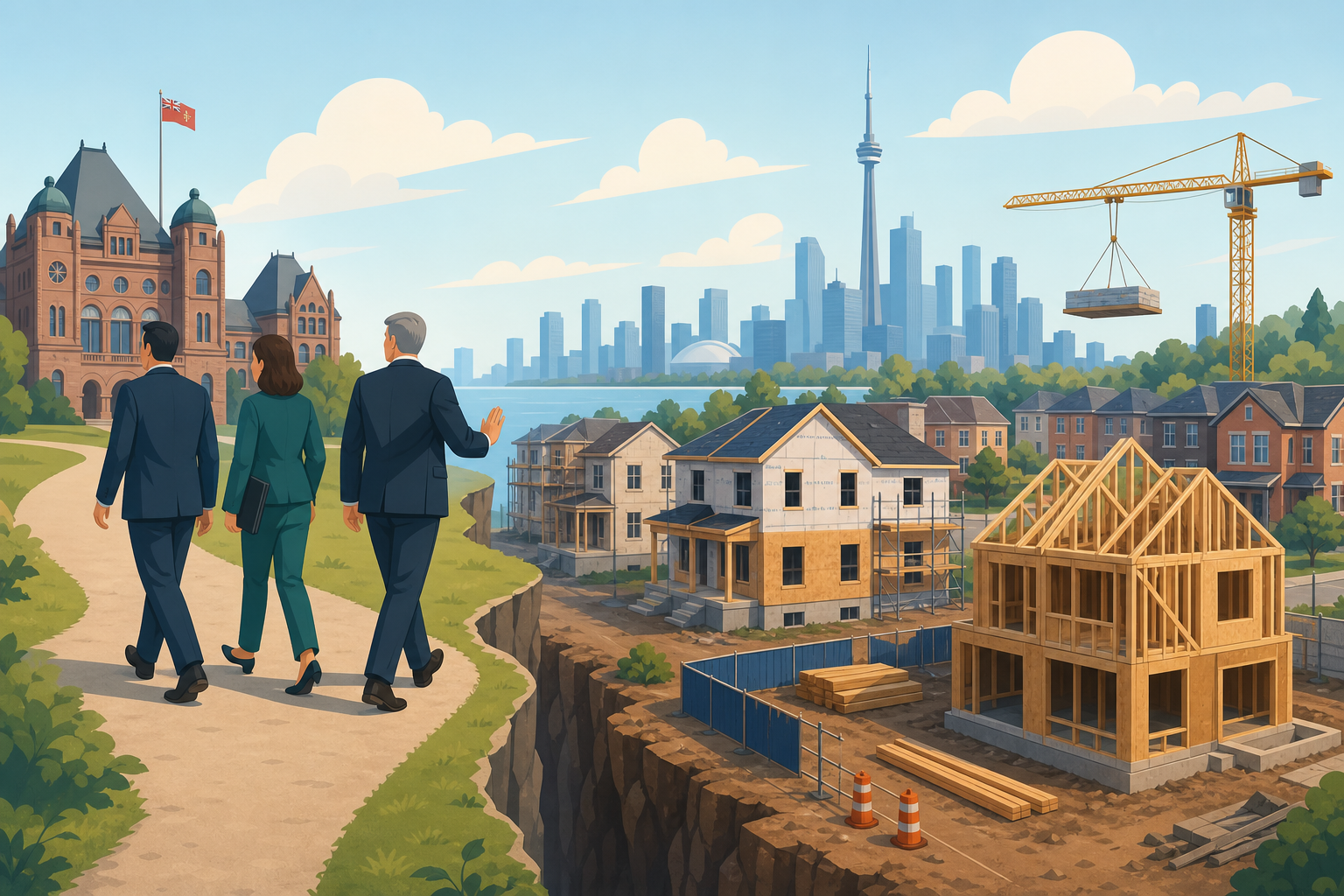

The province just moved the goalposts. Again.
Ontario's housing target for 2031 was always described as "1.5 million homes." Most people, including most real estate professionals, read that as total housing stock. It wasn't. The target has always been 1.5 million new homes by 2031, meaning net additions to the existing supply. The stock Ontario already has doesn't count toward the target. On March 27, 2026, the province's budget revealed it was falling even further behind that goal.
That distinction matters because Ontario's housing inventory in 2026 sits somewhere around 5.9 million units. The province isn't aiming for 1.5 million total. It's aiming to add 1.5 million on top of what's already here. If you're waiting for prices to soften because supply is "catching up," you're waiting on a different timeline than you thought.
Why this isn't just semantics
The language shift rewrites the math. A target of 1.5 million homes total would mean the province was roughly two-thirds of the way there before it started. A target of 1.5 million new homes means Ontario needs to build at a pace it has never sustained in modern history.
Between 2016 and 2021, Ontario added roughly 350,000 homes, according to census data. That's 70,000 per year. To hit 1.5 million new units by 2031, the province needs to average 175,000 starts annually. The best year Ontario has ever recorded was around 100,000 starts. The target requires roughly 75% more than that peak, every year, without a miss.
The gap isn't narrowing. It's widening.
What this does to price expectations
If you're a first-time buyer in the GTA and you've been holding off because "supply is coming," the clarified target should reset that assumption. Supply is not coming at the speed required to move prices materially lower in the near term. The arithmetic doesn't support it.
A detached home in Mississauga that sold for $1.4 million in February 2022, dropped to $1.19 million by mid-2023, and has since climbed back to around $1.3 million is not going back to $900,000 just because Ontario announced a higher target. The target has to turn into actual housing, and actual housing requires zoning changes, municipal approvals, financing, labour, and time. None of those move quickly.
If you're waiting for a market where bidding wars disappear because listings outnumber buyers, you're waiting on a 2029 scenario at the earliest, and that's assuming Ontario somehow triples its annual build rate starting this year. It won't.
The municipal problem nobody's fixing
Ontario can announce any target it wants. The constraint isn't political will. It's municipal capacity. Most of the GTA's housing growth happens in a handful of outer suburbs: Brampton, Vaughan, Milton, Pickering. Those municipalities are already approving developments faster than they can expand the roads, water lines, transit, and schools needed to serve them.
The province can override zoning and force density. It's done that. But it can't override the fact that a municipality with a $400 million annual capital budget and $2 billion in deferred maintenance on roads, water lines, transit, and schools can't suddenly absorb 15,000 new units a year without breaking something.
That bottleneck doesn't show up in the province's housing target. It shows up three years later when developments sit half-built because the city couldn't issue occupancy permits fast enough.
What you should do with this
If you're buying, the clarified target doesn't change the decision. It confirms what the market was already telling you: supply is not arriving fast enough to drive prices down in the near term. If you're waiting for a collapse, you're betting against the math.
If you're selling, the same logic applies. The inventory crunch isn't resolving this year or next. Pricing power hasn't disappeared.
If you're building, the target is political theater. The real constraint is still approvals, and the province hasn't fixed that.
Ontario now needs 1.5 million new homes by 2031. The question is what happens to prices when the gap becomes undeniable.
Sources
Read Next
The Government's 'Productivity Deduction' Is a Rebrand, Not a Reform
Pay Down Your House Before Your Rental: The Tax Math Real Estate Investors Miss
The OAS Clawback Is 15 Cents Per Dollar, Not 30 or 50
7 streaming services worth paying for in Canada, plus the credit cards that cut your bill