Ohio Manufacturers Face Disruption from Trump's Canada Tariffs
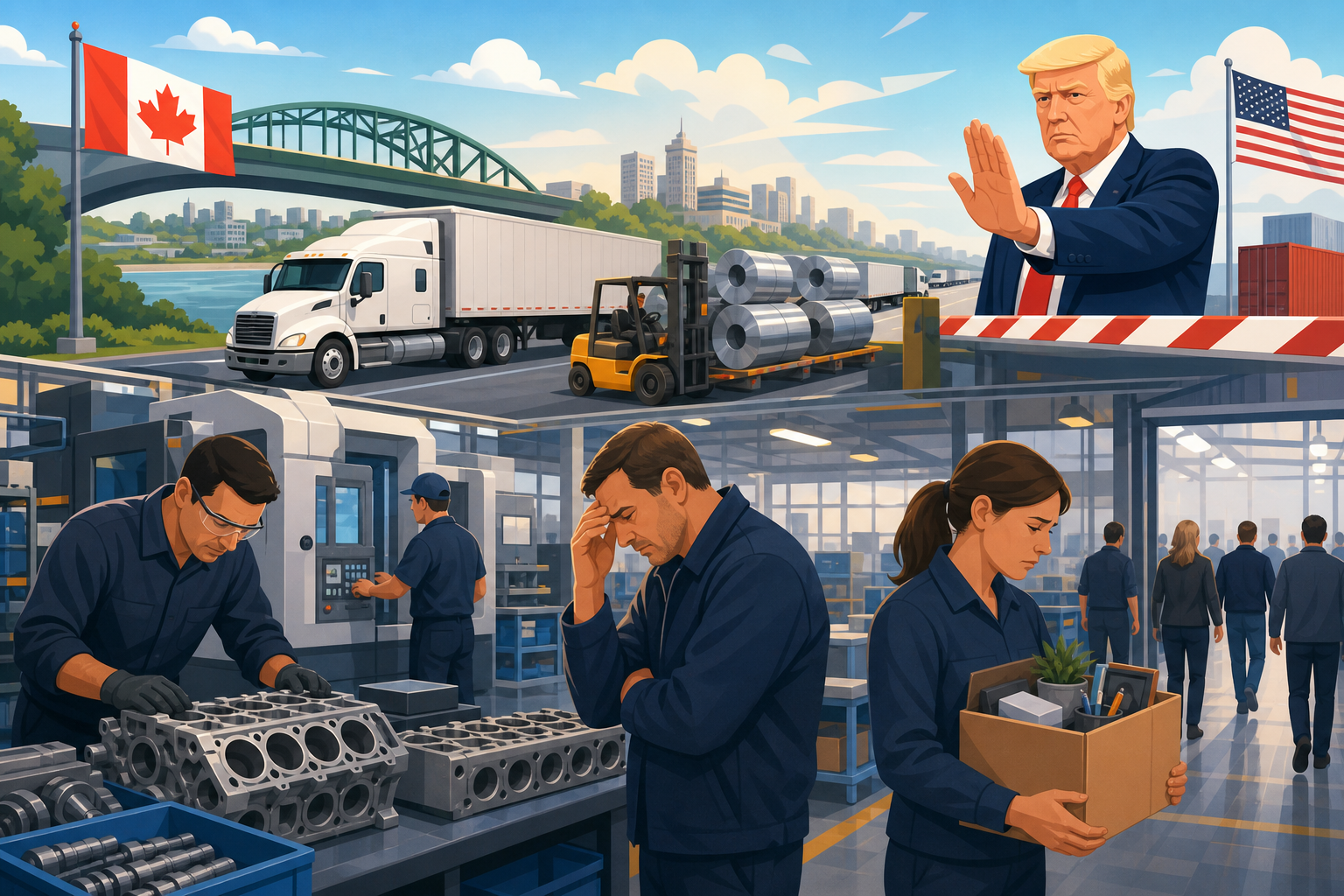
The Dayton-area manufacturer makes diesel engine parts that cross the border six times before final assembly. In the second quarter of 2026, that company's input costs rose sharply. The plant operates on margins thin enough that a $200,000 quarterly swing matters. By June, it had reduced headcount.
That pattern repeated across Ohio's industrial corridors during the spring and summer of 2026. The state, which ships 31% of its exports to Canada — machinery, automotive components, processed food — saw trade disruptions following the re-imposition of Section 232 tariffs on Canadian aluminum and steel. Ohio's manufacturers depend on those metals. When the restructured tariff took effect in April 2026, the supply chain that had run on cross-border efficiency for three decades buckled.
The arithmetic broke silently
A Toledo auto-parts fabricator had been buying rolled aluminum from a supplier in Windsor. Under the restructured Section 232 tariff regime, rolled aluminum faced a 50% tariff rate on wholly metal articles as of April 2026. The fabricator's contract with Ford locked pricing through Q3. For four months, the company absorbed the difference. Its operating margin contracted sharply. In July it announced shift reductions. Manufacturing employment trends remained mixed through mid-2026, with year-over-year gains masking localized disruptions in trade-exposed sectors. The jobs disappeared quietly, one shift closure at a time, in cities that had voted for the candidate who promised to bring manufacturing back.
Canada retaliated with precision
The Canadian government's C$15.6 billion in retaliatory tariffs, announced in March 2026, targeted Ohio corn, soybeans, and bourbon. Not coincidentally, those goods come from counties that swung Republican in 2024. By late spring, Ohio soybean farmers were facing downward price pressure amid broader agricultural trade tensions. Soybean farmers faced difficult decisions as export channels contracted.
The trade relationship that justified the targeting runs deep. Daily cross-border goods trade between the U.S. and Canada totals C$3.6 billion. Ohio sits at the center of that flow, particularly in the Great Lakes corridor where just-in-time logistics assumes goods cross without friction. The tariffs replaced efficiency with cost. Companies that had been running 72-hour inventory buffers began stockpiling. Warehousing costs in the Cleveland region rose during the first half of 2026 as companies increased inventory buffers.
The political bargain unraveled
Trade associations warned that steel-using sectors faced higher costs even as domestic steel producers saw improved conditions. The steel mills in Lorain and Warren did see a bump, domestic pricing stabilized and order books filled. But appliance manufacturers, automotive suppliers, and HVAC fabricators faced the inverse. Their costs went up and their customers began looking at suppliers in Mexico, where USMCA rules still applied without the metal surcharge.
What had seemed like protection turned out to be exposure. The state's largest export partner, a stable democracy with integrated supply chains, became the target of a policy designed for adversarial trade relationships. By September, Ohio legislators who had supported executive tariff authority were fielding calls from the same manufacturers who had once backed the protectionist rhetoric.
The diesel-parts plant outside Dayton is still operating. But the company now keeps larger aluminum inventories on hand, capital that used to go into R&D. That capital used to go into R&D.



The Dayton-area manufacturer makes diesel engine parts that cross the border six times before final assembly. In the second quarter of 2026, that company's input costs rose sharply. The plant operates on margins thin enough that a $200,000 quarterly swing matters. By June, it had reduced headcount.
That pattern repeated across Ohio's industrial corridors during the spring and summer of 2026. The state, which ships 31% of its exports to Canada — machinery, automotive components, processed food — saw trade disruptions following the re-imposition of Section 232 tariffs on Canadian aluminum and steel. Ohio's manufacturers depend on those metals. When the restructured tariff took effect in April 2026, the supply chain that had run on cross-border efficiency for three decades buckled.
The arithmetic broke silently
A Toledo auto-parts fabricator had been buying rolled aluminum from a supplier in Windsor. Under the restructured Section 232 tariff regime, rolled aluminum faced a 50% tariff rate on wholly metal articles as of April 2026. The fabricator's contract with Ford locked pricing through Q3. For four months, the company absorbed the difference. Its operating margin contracted sharply. In July it announced shift reductions. Manufacturing employment trends remained mixed through mid-2026, with year-over-year gains masking localized disruptions in trade-exposed sectors. The jobs disappeared quietly, one shift closure at a time, in cities that had voted for the candidate who promised to bring manufacturing back.
Canada retaliated with precision
The Canadian government's C$15.6 billion in retaliatory tariffs, announced in March 2026, targeted Ohio corn, soybeans, and bourbon. Not coincidentally, those goods come from counties that swung Republican in 2024. By late spring, Ohio soybean farmers were facing downward price pressure amid broader agricultural trade tensions. Soybean farmers faced difficult decisions as export channels contracted.
The trade relationship that justified the targeting runs deep. Daily cross-border goods trade between the U.S. and Canada totals C$3.6 billion. Ohio sits at the center of that flow, particularly in the Great Lakes corridor where just-in-time logistics assumes goods cross without friction. The tariffs replaced efficiency with cost. Companies that had been running 72-hour inventory buffers began stockpiling. Warehousing costs in the Cleveland region rose during the first half of 2026 as companies increased inventory buffers.
The political bargain unraveled
Trade associations warned that steel-using sectors faced higher costs even as domestic steel producers saw improved conditions. The steel mills in Lorain and Warren did see a bump, domestic pricing stabilized and order books filled. But appliance manufacturers, automotive suppliers, and HVAC fabricators faced the inverse. Their costs went up and their customers began looking at suppliers in Mexico, where USMCA rules still applied without the metal surcharge.
What had seemed like protection turned out to be exposure. The state's largest export partner, a stable democracy with integrated supply chains, became the target of a policy designed for adversarial trade relationships. By September, Ohio legislators who had supported executive tariff authority were fielding calls from the same manufacturers who had once backed the protectionist rhetoric.
The diesel-parts plant outside Dayton is still operating. But the company now keeps larger aluminum inventories on hand, capital that used to go into R&D. That capital used to go into R&D.
Sources
Read Next
The OAS Clawback Is 15 Cents Per Dollar, Not 30 or 50
7 streaming services worth paying for in Canada, plus the credit cards that cut your bill
Ontario and B.C. First-Time Buyers Are Borrowing in Pairs, and the Cracks Are Starting to Show
Why Paying Off Your Mortgage First Can Cost You More Than the Interest Rate