Chrétien's Counter-Tariff Playbook: Why Canada Can't Blink First
Jean Chrétien stood in front of Adrienne Arsenault's camera and said what the polite talking heads wouldn't: if Washington slaps a tariff on Canadian exports, Ottawa hits back harder. Not eventually. Not after consultation. Immediately.
The former prime minister's position, delivered to CBC News in his usual plainspoken manner, carries weight because it comes from someone who spent a decade managing the same asymmetry every Canadian trade negotiator faces. The United States takes 71.7% of Canadian merchandise exports (down from 75.9% in 2024). Canada takes roughly 15% of American goods (15.41% in 2025). In a pure numbers fight, Canada loses. But Chrétien's counter-tariff doctrine isn't about winning a numbers fight. It's about making sure the fight costs Washington enough that it stops picking one.
The Mechanics of Reciprocity
Canada's legal authority to retaliate sits in two pieces of federal legislation: the Customs Act and the Export and Import Permits Act. Under those statutes, the government can impose surtaxes on U.S. goods in response to Section 232 or Section 301 actions from Washington without requiring new parliamentary approval. The government can impose these surtaxes within weeks, without waiting for a new law to pass through Parliament.
When the U.S. imposed a 50% tariff on Canadian steel in 2025 under Section 232's national security provision, Canada responded with C$27.6 billion in countermeasures targeting products from politically sensitive districts. Bourbon from Kentucky. Orange juice from Florida. Dairy from Wisconsin. The retaliation wasn't designed to replace lost steel revenue. It was designed to generate phone calls to senators.
That surgical targeting is what separates modern trade retaliation from the blunt instruments of earlier decades. Canada can't match the U.S. dollar for dollar across the board, but it doesn't need to. It needs to make the tariff hurt in districts where congressional incumbents have tight margins. The political cost scales faster than the economic one.
Why the 2026 Clock Matters
The CUSMA trade agreement contains a sunset clause requiring a joint review in July 2026. Any signatory can signal its intent to withdraw or demand renegotiation at that point. The current tariff skirmishing isn't happening in a vacuum, it's the prelude to that review. Both sides are testing how much pain the other will absorb before formal talks begin.
Chrétien's position is that if Canada folds now, it loses leverage before the review even starts. The $3.6 billion in goods crossing the border daily makes Canada the more dependent party, but dependence cuts both ways when supply chains are this integrated. A 50% tariff on Canadian steel doesn't just hurt Canadian mills, it raises costs for U.S. automakers who rely on that steel to build cars in Michigan and Ohio.
The integrated supply chain is the hidden constraint on Washington's willingness to escalate. American manufacturers opposed the steel tariff because it raised their input costs while their profit margins were already shrinking. Their factories use Canadian steel to build cars and trucks, and a tariff on that steel made every vehicle they produced more expensive to make. Canada's counter-tariffs amplify that pressure by hitting consumer-facing products in swing states.
The Inflation Trade-Off
Counter-tariffs aren't free. Every surtax Canada imposes raises the domestic price of the affected good. Orange juice gets more expensive. Bourbon costs more. Industrial inputs from the U.S. that Canadian manufacturers depend on carry higher price tags, which either compresses margins or gets passed to consumers as inflation.
Chrétien's calculus is that the inflationary cost of retaliation is smaller than the economic cost of capitulation. If Canada doesn't respond, U.S. tariffs stay in place and Canadian exporters lose market access permanently. The inflation is temporary. The market access loss isn't.
That trade-off worked in the 1990s when Chrétien's government used targeted retaliation to force the U.S. to back down on softwood lumber restrictions. Whether it works in 2026 depends on how long both sides are willing to let the pain accumulate before someone picks up the phone.
Canada can't outlast the U.S. in a pure endurance contest. But endurance isn't the play. The play is making the cost of the tariff visible to the lawmakers who authorized it. That only works if the counter-tariff lands fast and stays in place until it does.


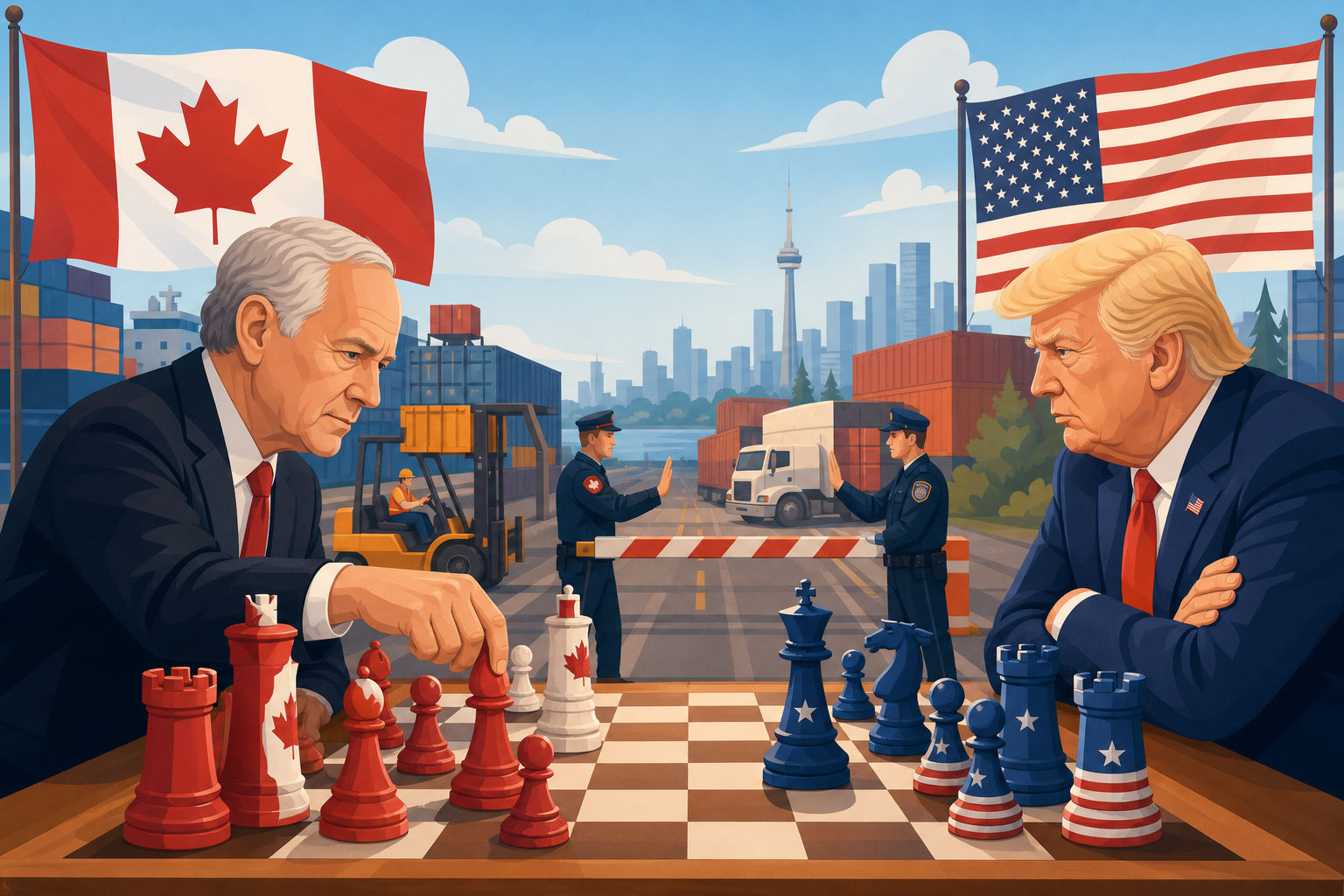

Jean Chrétien stood in front of Adrienne Arsenault's camera and said what the polite talking heads wouldn't: if Washington slaps a tariff on Canadian exports, Ottawa hits back harder. Not eventually. Not after consultation. Immediately.
The former prime minister's position, delivered to CBC News in his usual plainspoken manner, carries weight because it comes from someone who spent a decade managing the same asymmetry every Canadian trade negotiator faces. The United States takes 71.7% of Canadian merchandise exports (down from 75.9% in 2024). Canada takes roughly 15% of American goods (15.41% in 2025). In a pure numbers fight, Canada loses. But Chrétien's counter-tariff doctrine isn't about winning a numbers fight. It's about making sure the fight costs Washington enough that it stops picking one.
The Mechanics of Reciprocity
Canada's legal authority to retaliate sits in two pieces of federal legislation: the Customs Act and the Export and Import Permits Act. Under those statutes, the government can impose surtaxes on U.S. goods in response to Section 232 or Section 301 actions from Washington without requiring new parliamentary approval. The government can impose these surtaxes within weeks, without waiting for a new law to pass through Parliament.
When the U.S. imposed a 50% tariff on Canadian steel in 2025 under Section 232's national security provision, Canada responded with C$27.6 billion in countermeasures targeting products from politically sensitive districts. Bourbon from Kentucky. Orange juice from Florida. Dairy from Wisconsin. The retaliation wasn't designed to replace lost steel revenue. It was designed to generate phone calls to senators.
That surgical targeting is what separates modern trade retaliation from the blunt instruments of earlier decades. Canada can't match the U.S. dollar for dollar across the board, but it doesn't need to. It needs to make the tariff hurt in districts where congressional incumbents have tight margins. The political cost scales faster than the economic one.
Why the 2026 Clock Matters
The CUSMA trade agreement contains a sunset clause requiring a joint review in July 2026. Any signatory can signal its intent to withdraw or demand renegotiation at that point. The current tariff skirmishing isn't happening in a vacuum, it's the prelude to that review. Both sides are testing how much pain the other will absorb before formal talks begin.
Chrétien's position is that if Canada folds now, it loses leverage before the review even starts. The $3.6 billion in goods crossing the border daily makes Canada the more dependent party, but dependence cuts both ways when supply chains are this integrated. A 50% tariff on Canadian steel doesn't just hurt Canadian mills, it raises costs for U.S. automakers who rely on that steel to build cars in Michigan and Ohio.
The integrated supply chain is the hidden constraint on Washington's willingness to escalate. American manufacturers opposed the steel tariff because it raised their input costs while their profit margins were already shrinking. Their factories use Canadian steel to build cars and trucks, and a tariff on that steel made every vehicle they produced more expensive to make. Canada's counter-tariffs amplify that pressure by hitting consumer-facing products in swing states.
The Inflation Trade-Off
Counter-tariffs aren't free. Every surtax Canada imposes raises the domestic price of the affected good. Orange juice gets more expensive. Bourbon costs more. Industrial inputs from the U.S. that Canadian manufacturers depend on carry higher price tags, which either compresses margins or gets passed to consumers as inflation.
Chrétien's calculus is that the inflationary cost of retaliation is smaller than the economic cost of capitulation. If Canada doesn't respond, U.S. tariffs stay in place and Canadian exporters lose market access permanently. The inflation is temporary. The market access loss isn't.
That trade-off worked in the 1990s when Chrétien's government used targeted retaliation to force the U.S. to back down on softwood lumber restrictions. Whether it works in 2026 depends on how long both sides are willing to let the pain accumulate before someone picks up the phone.
Canada can't outlast the U.S. in a pure endurance contest. But endurance isn't the play. The play is making the cost of the tariff visible to the lawmakers who authorized it. That only works if the counter-tariff lands fast and stays in place until it does.
Sources
Read Next
The OAS Clawback Is 15 Cents Per Dollar, Not 30 or 50
7 streaming services worth paying for in Canada, plus the credit cards that cut your bill
Ontario and B.C. First-Time Buyers Are Borrowing in Pairs, and the Cracks Are Starting to Show
Why Paying Off Your Mortgage First Can Cost You More Than the Interest Rate